Ẹ̀gbẹ́
Existing AI writing tools like Jasper and Copy.ai are positioned for marketing teams at larger businesses, with pricing and feature sets to match. Meanwhile, solo creators and small business owners — the people who arguably need writing help the most — are stuck either paying for tools built for someone else, wrestling with generic ChatGPT outputs that sound robotic, or spending hours drafting posts from scratch. I built Ẹ̀gbẹ́ to close that gap: AI content help, designed specifically for creators of one.
Client
Personal project
Services
UX Research, UI & UX Design, Prototyping, Product Build (with Claude Code)
Industries
Communications / Content Creation
Date
2 weeks (May 2026)
Most AI writing tools sound like AI. Ẹ̀gbẹ́ — Yoruba for companion — is a content creation assistant built for solo creators and small business owners who want AI help without losing their voice. After interviewing six content creators, I designed and shipped a live MVP that learns a user's tone, audience, and platform preferences during onboarding, then generates posts that match their voice. Feedback from the same group shaped a roadmap that includes voice input and post-length controls.
The Problem The idea started with conversations with content creator friends who kept hitting the same two walls: not knowing what to post about, and struggling to draft posts that didn't sound generic when they tried AI tools. To validate this, I ran 30-minute interviews with 6 content creators — a mix of solo entrepreneurs and small business owners — combined with casual conversations in my network. Key insights: - AI-generated content doesn't sound like them. Creators said outputs from existing tools felt robotic and required heavy rewriting, often defeating the time-saving purpose. - Ideation is half the battle. Several creators said the hardest part wasn't writing — it was figuring out what to write about that week. - Tools should plug into existing workflows. Multiple creators asked about integrations with Canva and CapCut so they wouldn't have to context-switch across five apps. - Bigger AI tools feel built for someone else. Pricing, onboarding flows, and feature density were all calibrated for marketing teams, not solo creators.
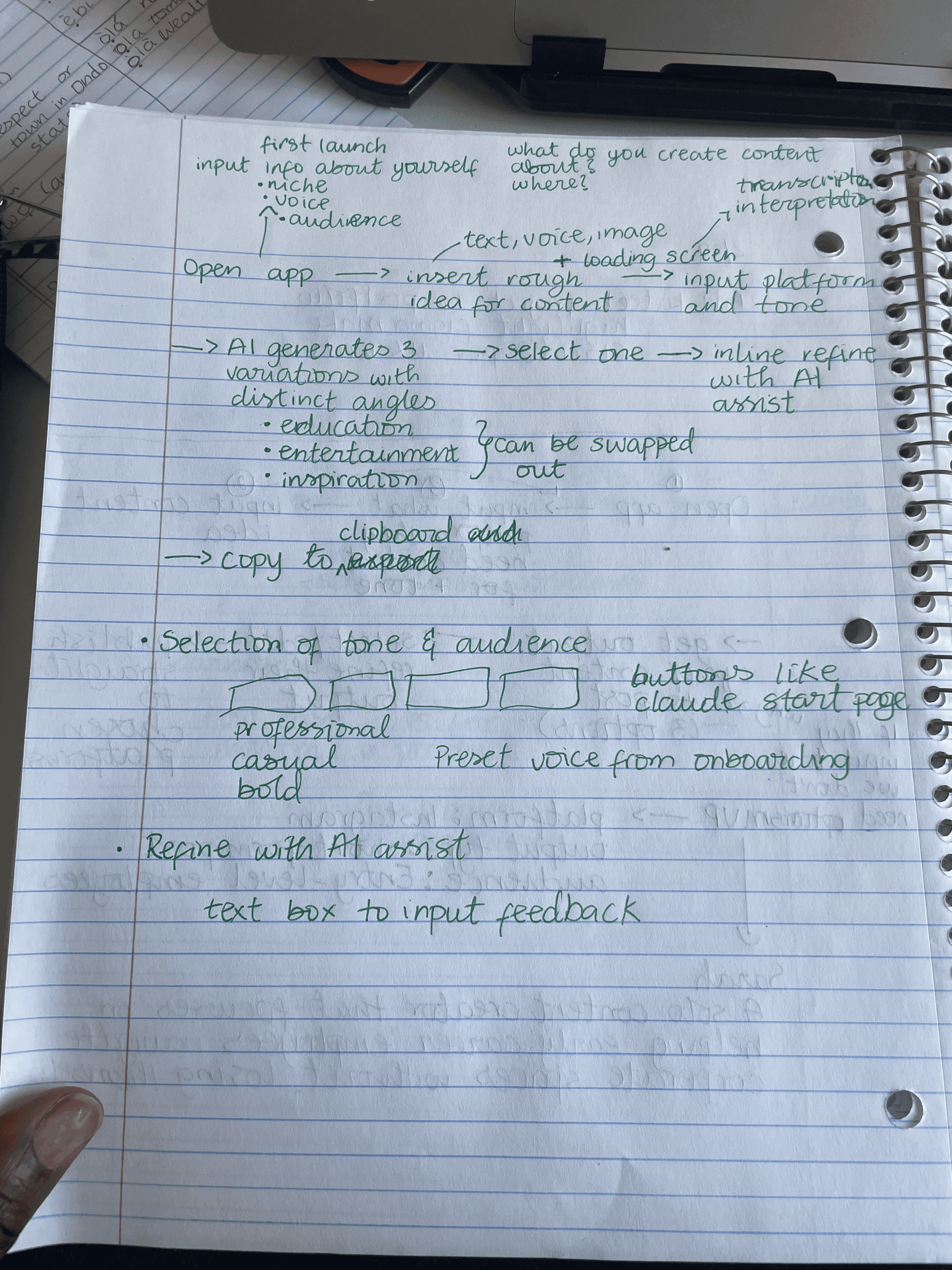
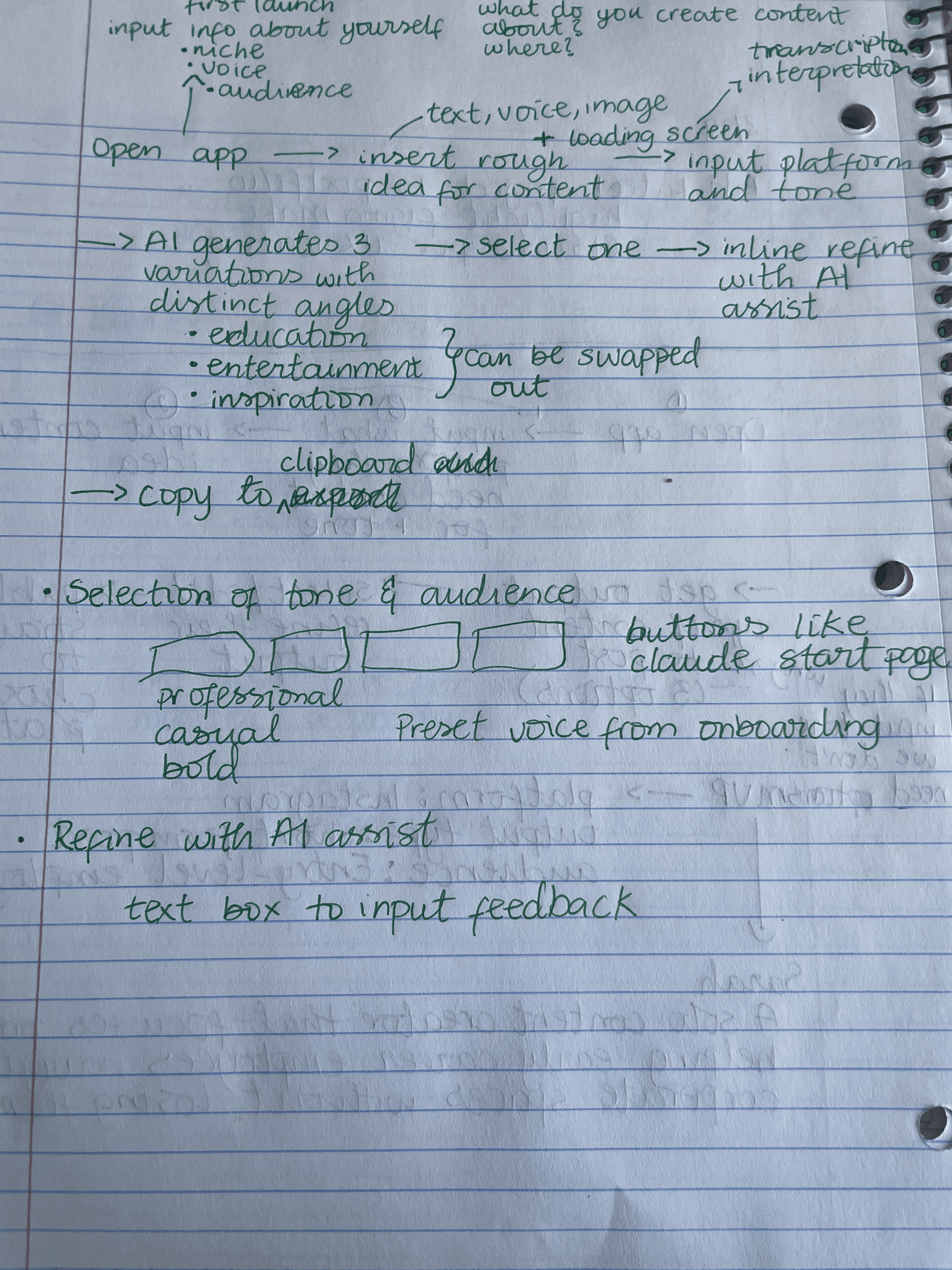
Competitive Landscape I looked at how the major players were positioned: - Jasper and Copy.ai target marketing teams at mid-to-large businesses, with team-collaboration features and enterprise pricing. - ChatGPT is general-purpose, which means creators have to do all the prompting work themselves to get on-brand output. The gap: an AI content tool that's accessible to solo creators, learns their specific voice without extensive prompting, and feels right-sized for someone managing their own social presence.
Iteration & Testing Once the MVP was live, I shared the link with the same content creators and watched them use it. What I heard: - "I wish the navigation was always in view" — users were losing their place in longer flows. - "The Instagram posts are too long, I wish I could decide the length I want" — fixed-length output didn't fit how creators actually post. - "I wish I could add a voice recording of my ideas instead of typing" — opens a future direction for input modality. What's worked: - "It works well" - "I would definitely use this frequently for my posts"
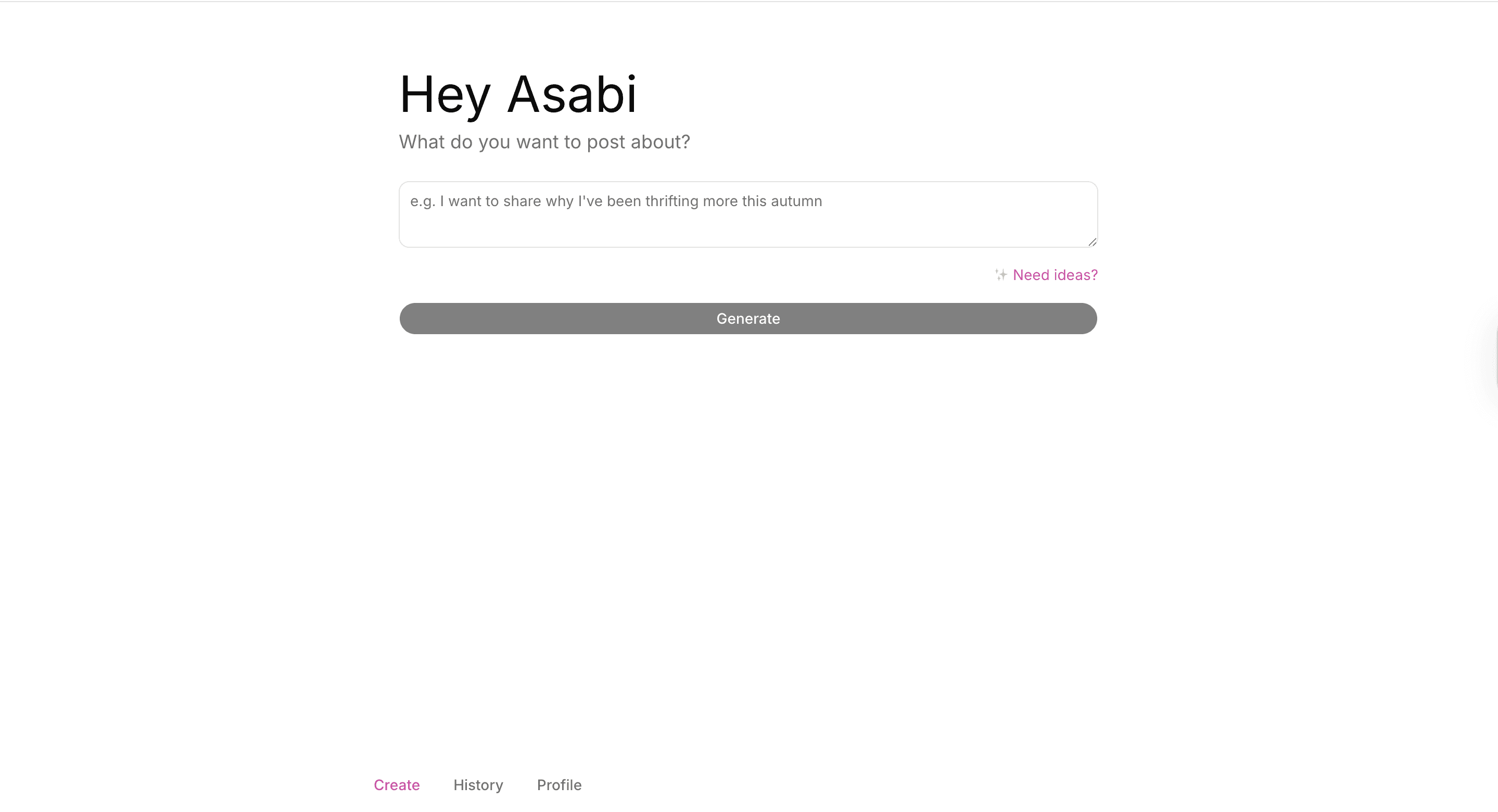
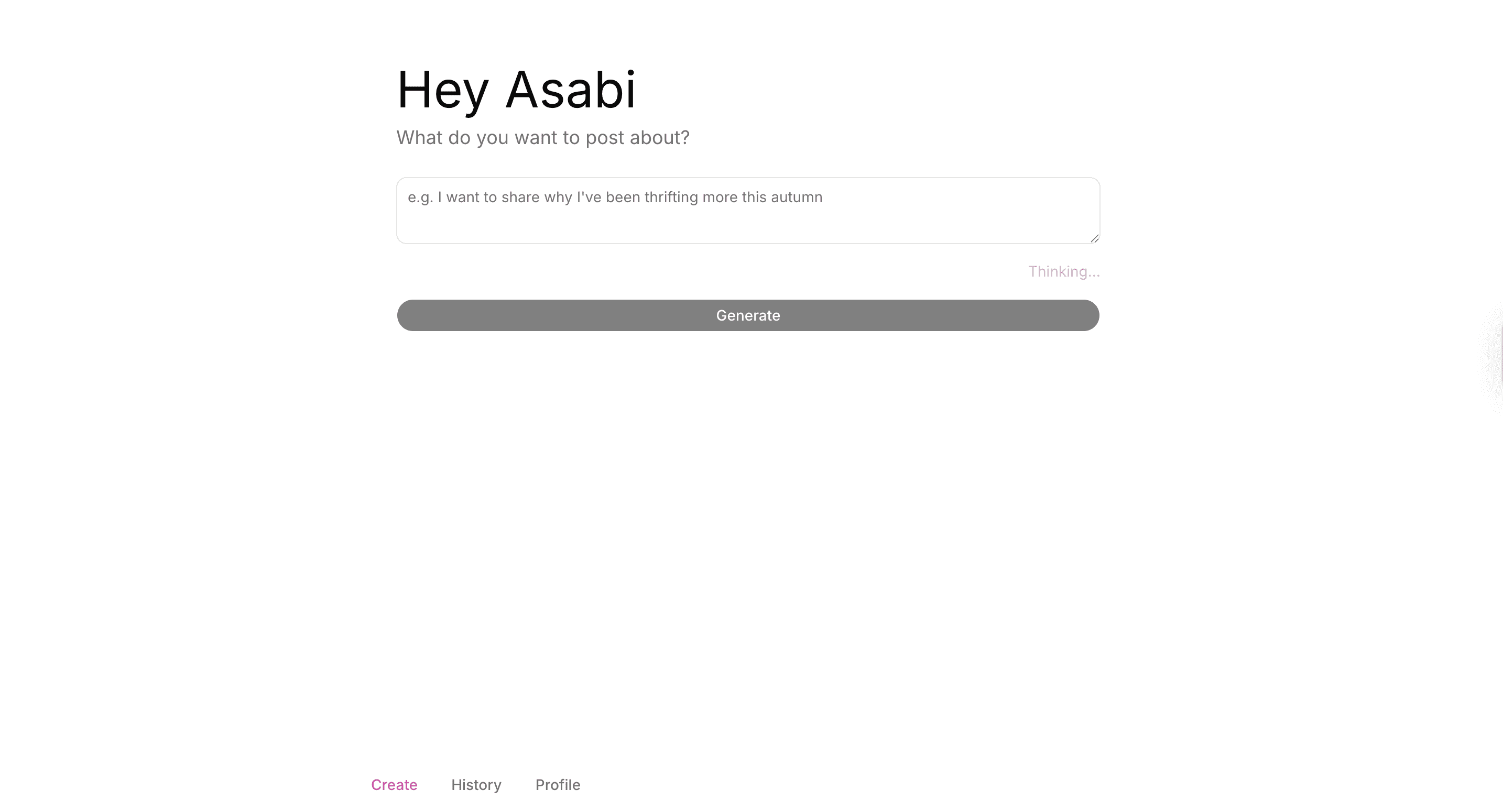
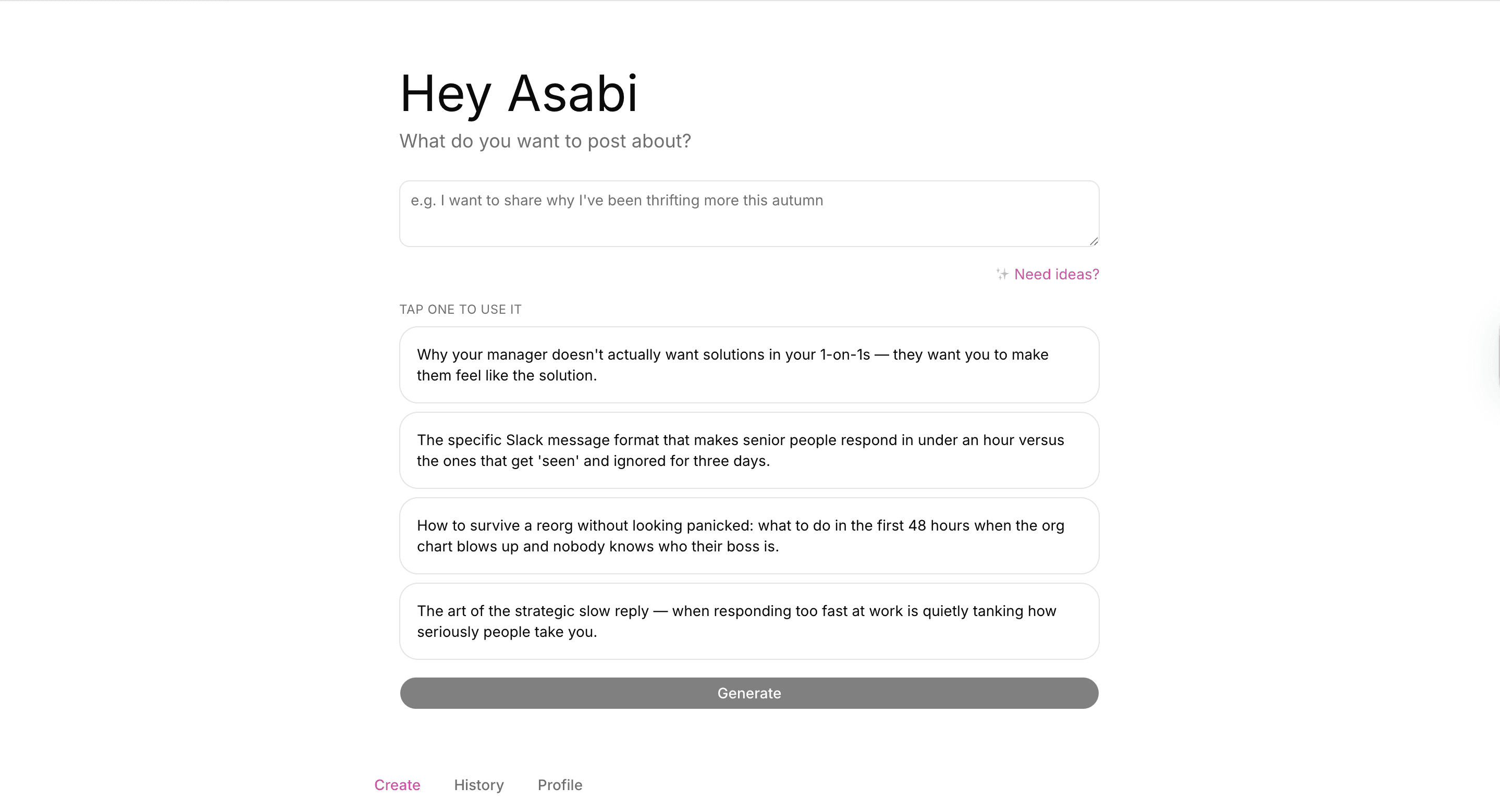
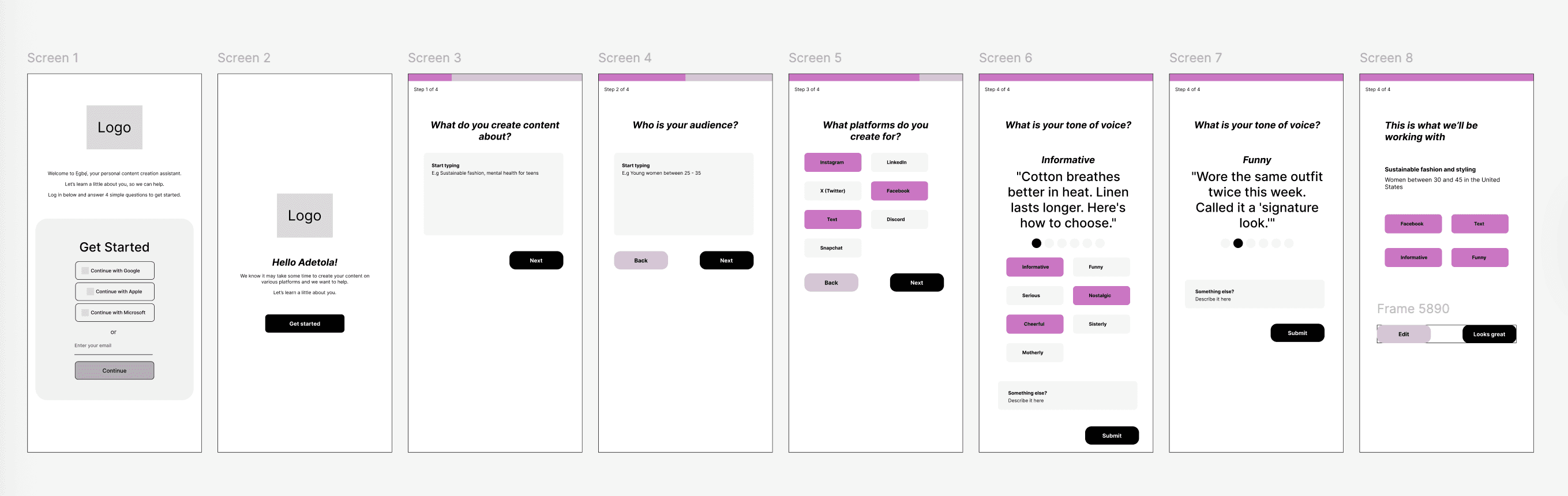
The Solution Ẹ̀gbẹ́'s MVP is built around three core areas: 1. Onboarding that teaches the AI who you are Instead of asking users to write detailed prompts every time, Ẹ̀gbẹ́ captures voice context once during onboarding: tone, target audience, platforms they post on, and optionally writing samples. This context lives in the background and is applied to every generation. 2. Create — with a "Need Ideas?" assist The primary workspace is a text box where users drop a rough idea and Ẹ̀gbẹ́ drafts a post in their voice. For days when inspiration is dry, the Need Ideas? feature generates prompts tailored to the user's profile — not generic suggestions, but ones grounded in their niche and audience. 3. History and Profile Users can revisit and refine past generations, and update their voice profile as their brand evolves. Process & Key Decisions Designed wireframes, then built with AI assistance. I designed Ẹ̀gbẹ́ end-to-end and worked with Claude Code to ship a live product using Vercel, GitHub, Supabase, and Resend. Owning both the design and the build let me make tighter decisions about what was feasible in a 2-week timeline and iterate on UX issues immediately when I spotted them in the build. The "Need Ideas?" feature came from user input. I added the ideation prompt feature after a tester said the blank text box was the hardest part of the experience. This is now one of the features I'm proudest of — it solves the half of the problem (ideation) that the original MVP under-served. A bug became a better experience. The original auth flow used Supabase's magic-link sign-in, but I ran into bugs with the link redirect. Rather than rebuild it, I switched to email OTP. In testing, this turned out to be a better UX anyway — users were more familiar with OTP codes than magic links, and there was no "did the email arrive?" anxiety mid-flow. The workaround became the design decision. What's Next Based on user feedback, the v2 roadmap includes: - Persistent navigation to fix the in-flow disorientation - User-controlled post length so Instagram captions aren't one-size-fits-all - Voice input for capturing ideas hands-free - Exploration of Canva and CapCut integrations to keep creators in flow across their tools
Outcomes: - Live MVP shipped in 2 weeks, tested by 6 content creators - Qualitative validation that the voice-matching approach resolves the "AI sounds robotic" problem - A clear, user-informed roadmap heading into v2
Reflection
Building Ẹ̀gbẹ́ end-to-end — from research through shipping — reinforced that the most important features often aren't the ones in the original spec. The Need Ideas feature, the OTP auth flow, and the post-length control all came from listening to users after the first version was already in their hands. The name Ẹ̀gbẹ́ — companion in Yoruba — reflects the bet underneath the product: AI in content creation works best not as a replacement for the creator's voice, but as a companion to it.